
Official Site Of Bailiffhelp.co.uk
- Written By Bailiff Help Editorial Team
- Last Updated: 27 January 2026
Can Bailiffs Take My Car?
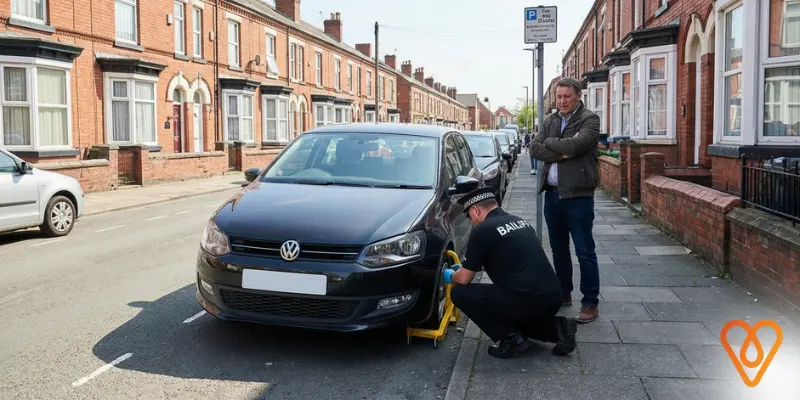
Few things cause panic like seeing a bailiff near your car. For many people, a car is essential for work, family life, medical needs, or simply coping day to day. It is no surprise that one of the most common questions we hear at Bailiff Help is can bailiffs take my car.
If you are worried about bailiffs clamping or removing your vehicle, you are not alone. This guide explains who this affects, why the rules feel so confusing, and exactly what the law says. You will learn when a bailiff can take a car, when they cannot, and how Bailiff Help can support you calmly and legally.
Summary
This guide explains can bailiffs take my car, including cars on finance, cars for parking fines, cars used for disability or work, and how to stop bailiffs taking your car using UK law and proper support.
Can a bailiff take my car?
In some situations, yes, a bailiff can take your car, but only if strict legal conditions are met.
Under GOV.UK guidance on bailiff powers, bailiffs can take control of vehicles if:
The vehicle belongs to the debtor
It is not exempt under the law
It is not essential for basic needs or work
Correct notice has been given
They cannot simply take any car they see. Ownership, use, and location all matter. Bailiff Help can explain your options before this escalates.
Can a bailiff take a car on finance?
If you are asking can a bailiff take a car on finance, the answer is usually no.
According to GOV.UK guidance on taking control of goods, bailiffs can only take items you legally own. With hire purchase or PCP agreements:
The finance company usually owns the car
You do not own it until the agreement ends
Bailiffs cannot seize goods you do not own
This also applies if you are wondering can bailiffs take a financed car or can bailiffs take my car if it is on finance. Bailiff Help can help you prove finance ownership quickly.
Can bailiffs take my car for a parking fine?
Yes, bailiffs are more likely to target vehicles for parking fines and traffic debts.
Under HM Courts and Tribunals Service enforcement rules, local authority parking debts allow bailiffs to:
Clamp vehicles
Remove vehicles
Act more quickly than for other debts
However, rules still apply. If the car is essential for work or disability, exemptions may apply. Bailiff Help can step in before this escalates.
Can bailiffs take my car if I need it for work?
In many cases, no, bailiffs cannot take your car if you genuinely need it for work.
UK enforcement rules recognise that some vehicles are essential tools, not luxury items. If your car is necessary to earn a living, it may be classed as exempt goods.
A car is more likely to be protected if:
You need it to get to and from work and no reasonable alternative exists
You use it directly for your job (for example, self-employed trades, carers, delivery drivers)
Losing the car would seriously affect your ability to earn an income
However, exemption is not automatic. Bailiffs may still target a vehicle unless the work use is clearly explained and supported with evidence.
If you are asking can bailiffs take my car if I need it for work, the answer depends on proof. Wage slips, contracts, shift details, or employer letters can all help. Bailiff Help can guide you on what evidence works and how to present it before enforcement goes too far.
Can bailiffs take my car if I am disabled?
If you are disabled, bailiffs must take extra care.
The National Audit Office report on enforcement agents and GOV.UK vulnerable debtor guidance confirm that vehicles used for disability needs may be exempt.
This often includes:
Motability vehicles
Cars used for medical appointments
Vehicles adapted for mobility
If you are asking can bailiffs take my car if I am disabled, the answer is often no, but evidence matters. Bailiff Help can help you present this properly.

Get Help To Stop Bailiff Action Now
We Help Hundreds Of Clients Per Week To Stop Bailiff Debt Going Further
Can a bailiff clamp my car?
Yes, bailiffs can clamp a car, but only if they are legally allowed to take control of it, clamping is allowed when:
The car belongs to the debtor
It is not exempt
Enforcement is lawful
Proper notice has been given
They cannot clamp a car purely to scare you or without authority. Bailiff Help can help stop unlawful clamping.
Can bailiffs take my car without warning?
No. Bailiffs cannot take your car without warning.
Under GOV.UK enforcement rules, bailiffs must follow a clear legal process before taking control of goods, including vehicles. This usually involves:
Sending a Notice of Enforcement
Giving at least seven clear days’ warning
Explaining the debt and enforcement action
If you have not received proper notice, taking or clamping a car may be unlawful.
There are rare situations, such as certain traffic or parking debts, where enforcement moves faster, but notice is still required. Bailiffs cannot legally turn up without warning and remove a vehicle simply because a debt exists.
If you are asking can bailiffs take my car without warning, the short answer is no, not lawfully. If enforcement happens without notice, Bailiff Help can challenge it and help stop further action.
Can bailiffs take my car from private property?
This depends on where the car is and the type of debt.
Under Ministry of Justice enforcement guidance:
Bailiffs can take cars from driveways
They usually cannot take cars from locked garages
Access must be lawful and peaceful
If the vehicle is on third party land or clearly exempt, seizure may be unlawful. Bailiff Help can check this for you.
How to stop bailiffs taking your car
There are lawful ways to stop enforcement before a car is taken.
Options may include:
Proving the car is on finance
Showing it is essential for work or disability
Applying for a Breathing Space
Negotiating affordable payments
Challenging incorrect enforcement
The House of Commons Library briefing on debt enforcement confirms that enforcement must be proportionate. Bailiff Help can help stop bailiffs taking your car legally.
Conclusion
If you are asking can bailiffs take my car, the answer depends on ownership, use, debt type, and your circumstances. The law provides important protections, especially for cars on finance, cars used for work, and cars linked to disability. You are not powerless. Bailiff Help offers debt advice, IVAs, and bailiff enforcement intervention to help protect your vehicle and restore peace of mind.
Key Takeways
Bailiffs cannot take cars you do not legally own
Cars on finance are usually protected
Disability and work use can make a car exempt
Parking fines have different enforcement rules
Bailiff Help can explain can bailiffs take my car and help you act safely
Learn More About Your Bailiff Rights
Can Bailiffs Take My Car?
Get Bailiff Help Now Enquire Below
- Safe, secure & confidential
What Our Clients Say About Us
We’re Here To Answer All Your Questions
We know debt can feel overwhelming, and it’s natural to have questions before making a decision. Our FAQ covers the most common concerns about IVAs and other debt solutions so you can understand your options with confidence
Can bailiff take my car without warning?
In most situations, no. Bailiffs must usually send a Notice of Enforcement at least seven clear days before they take control of goods, including a car. This notice gives you time to seek advice, make payment arrangements, or challenge the action. There are limited exceptions, such as some court fines, but surprise visits are not the norm. Bailiff Help can talk this through with you for free and check whether proper notice was given.
Worried about a bailiff visit? Apply Now for confidential advice before they knock.
Can bailiffs take a financed car?
In most cases, no. If your car is on hire purchase or PCP finance, it is normally owned by the finance company, not you. Bailiffs can only take goods that legally belong to the debtor, which is confirmed in GOV.UK guidance on taking control of goods. You may need to provide proof of finance, such as an agreement or statement. Bailiff Help can help you confirm ownership quickly and stop enforcement if the car is protected.
Click Here To Apply For Help
Can bailiffs take my car for council tax?
They can in some circumstances, but there are still important limits. Bailiffs enforcing council tax arrears may clamp or remove a car if it belongs to you and is not exempt. However, if the car is essential for work, disability, or basic living, it may be protected. Bailiff Help can check your situation and advise whether council tax enforcement is being applied fairly.
Can bailiffs take my car if I need it for work?
Often no, especially if the car is essential for your job or self-employment and falls within the legal value limit. GOV.UK guidance protects tools of the trade, which can include vehicles needed to earn a living. Evidence is important here, such as proof of employment or business use. Bailiff Help can help stop bailiff action legally by presenting this information properly.
We help stop bailiffs in as little as 24 hours. Contact us now
Can bailiffs clamp my car outside my house?
They can only do this if they have the legal right to take control of the vehicle. The car must belong to you, not be exempt, and enforcement must follow correct procedure. Bailiffs cannot clamp a car just to pressure or intimidate you. If you believe clamping is unlawful, Bailiff Help can explain your rights and next steps.
Can bailiffs take my car if I am disabled?
Often no. Vehicles used for disability needs, including Motability vehicles or cars used for regular medical appointments, are usually treated as exempt. Bailiffs and creditors are required to take vulnerability into account under GOV.UK enforcement guidance. If this applies to you, Bailiff Help can help you raise this correctly and request enforcement is paused.
CLICK HERE to apply for help now
How do I stop bailiffs taking my car?
The key is acting early and using the law to your advantage. This may include proving the car is on finance, showing it is essential for work or disability, applying for a Breathing Space, or setting up an affordable repayment plan. You do not have to handle this alone. Bailiff Help can check your situation and advise on the safest and most effective way forward.
CLICK HERE to apply for help now

You can visit the Money Helper website to find out more about managing your money and to get free advice, they are an independent service set up to help people manage their money
bailiffhelp.co.uk is a trading style of SLWB LTD (Company No. 16451543).
Registered Office: Advice centre group, Second Floor A, Cheadle Place, Cheadle, Cheshire, England, SK8 2JX.
Adam Southard is authorised as a Licensed Insolvency Practitioner in the United Kingdom by the Insolvency Practitioners Association for SLWB LTD And Advice Centre Group Ltd We only provide advice after completing or receiving an initial fact find where the individual(s) concerned meet the criteria for one of our insolvency solutions, therefore, all advice regarding Individual Voluntary Arrangements (IVA) is given in reasonable contemplation of an insolvency appointment.
Adam Southard is licensed to act as an Insolvency Practitioner in the UK by the Insolvency Practitioners Association. Office Holder No. 11930
Insolvency Practitioner Directory- Insolvency Practitioner Details (bis.gov.uk)
What you need to know about Individual Voluntary Arrangements
(Insolvency Service)
We provide solutions to individuals throughout the UK, We Will help recommend solutions available to your circumstances in which you can then make an informed decision about which solution you qualify for is best for you and your circumstances.