
Official Site Of Bailiffhelp.co.uk
- Written By Bailiff Help Editorial Team
- Last Updated: 19 May 2026
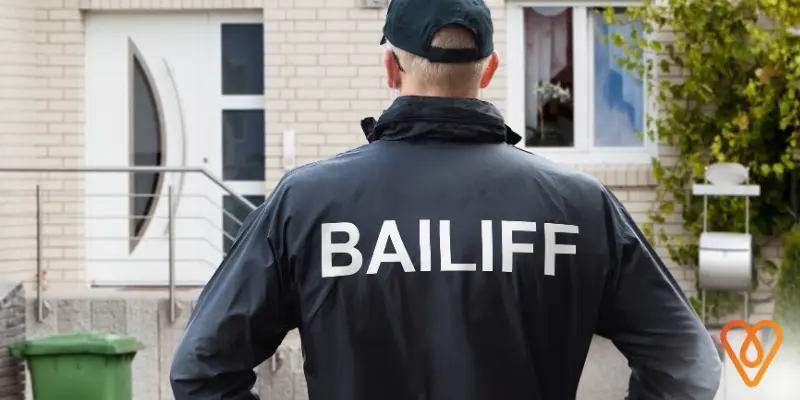
What Can Bailiffs Take?
Bailiffs can only take non-essential goods that you own outright. They cannot take essential household items, work tools under £1,350, children’s belongings, medical equipment, or anything that is on finance or belongs to someone else. Knowing this puts you in control before they knock.
Under UK law, enforcement agents must follow strict rules about what they can and cannot remove from your home. The Tribunals, Courts and Enforcement Act 2007 sets out exactly which goods are protected and the list is longer than most people realise. Fear and panic are what bailiffs rely on. Clear information is what stops them.
This guide covers exactly what bailiffs can take, what they cannot touch, how vehicle rules work, what happens if goods are removed, and how to stop enforcement action altogether.

What Can Bailiffs Take?
Summary
This guide explains exactly what bailiffs can take under UK law and, just as importantly, what they cannot. You have learned how bailiffs operate, which household items are protected, how vehicle rules work, and what happens if goods are removed and sold. We have also covered how to challenge unlawful bailiff behaviour and the realistic ways to stop enforcement action altogether. Understanding what can bailiffs take gives you back control, reduces fear, and helps you take the right next step with support from Bailiff Help.
Introduction
When you’re in debt, one of the most stressful experiences is dealing with bailiffs at your door. The fear that they might remove your belongings, or embarrass you in front of your neighbours, can feel overwhelming.
But here’s the truth: bailiffs have limits to what they can and cannot do under UK law. They cannot simply take whatever they want, and you have legal rights to protect essential household goods and belongings that aren’t yours.
This comprehensive guide explains:
What bailiffs can legally take from your home
What they cannot take (protected goods)
Special rules around vehicles, third-party goods, and entry
What happens if goods are taken and sold
How to stop bailiff action altogether
By the end, you’ll know exactly where you stand and how to get help if bailiffs are pressuring you.
Who Are Bailiffs And What Do They Do?
A bailiff (also called an enforcement agent) is someone authorised to collect debts on behalf of creditors. They can recover unpaid debts such as:
Council tax arrears
County Court Judgments (CCJs)
Parking fines and traffic penalties
Child maintenance arrears
Magistrates’ court fines
High Court enforcement (larger debts)
Types of Bailiffs:
County Court Bailiffs: enforce County Court Judgments.
High Court Enforcement Officers (HCEOs): enforce High Court writs.
Certificated Enforcement Agents: recover debts like council tax and parking fines.
While they have the power to remove goods, they must follow strict legal procedures under the Tribunals, Courts and Enforcement Act 2007.
What Bailiffs Can Take
So, let’s get to the point: what can bailiffs take if they come to your home?
The law says they can only take non-essential goods of value. This usually means things you own outright that could be sold to reduce your debt.
Common items bailiffs may take:
TVs, gaming consoles, stereos, and luxury electronics
Jewellery, antiques, and collectibles
Cars, motorbikes, or vans (with conditions – see below)
Spare furniture – e.g., an extra sofa or unused wardrobe
Controlled Goods Agreements (CGAs)
In practice, bailiffs often don’t take items straight away. Instead, they may list them in a Controlled Goods Agreement. This means:
They write down the goods they’ve identified.
You agree to make repayments.
If you stick to the plan, the goods stay with you.
If you break it, they can return and remove those items.
Be careful when signing a CGA breaking it can make things worse.
What Bailiffs Cannot Take
There are strict rules protecting essential goods. Bailiffs cannot remove items you and your family rely on for day-to-day living.
Protected goods include:
Beds, bedding, and essential furniture (you’re allowed one of each basic item per person)
Clothes, shoes, and everyday household goods
Fridges, cookers, microwaves, washing machines (if essential)
Work tools and equipment up to £1,350 in value
Children’s toys, school supplies, and belongings
Medical equipment or disability aids
Pets and guide dogs
If a bailiff tries to take these, they are breaking the law. You can make a complaint.
Can Bailiffs Take Your Car?
Cars are often the first thing people worry about. The rules are a bit more complex here.
Bailiffs can take your car if:
You own it outright
It’s not essential for work
It’s not adapted for disability use
Bailiffs cannot take your car if:
It’s on finance, hire purchase, or lease – because it legally belongs to the finance company
It’s a Motability vehicle
It’s essential for your job (e.g., a tradesperson’s van)
It’s adapted for disability
If your car is wrongly taken, you should act quickly by showing proof of finance or essential use.
Can Bailiffs Take Items That Belong to Someone Else?
No – bailiffs can only take goods belonging to the debtor. But in reality, they may challenge this if it isn’t clear.
If goods belong to someone else, show evidence such as:
Receipts or invoices in their name
Bank statements showing payment
A statutory declaration of ownership
Without proof, bailiffs may assume the goods are yours.
Can Bailiffs Take Sofas?
Bailiffs can take spare sofas that are not essential for your basic domestic needs. However, they cannot take your main sofa if it is the only one you have for everyday use.
Under the Taking Control of Goods Regulations 2013, bailiffs must leave furniture that is necessary for satisfying the basic domestic needs of you and your family. This means one sofa per household is protected.
If you have extra sofas or additional furniture that is not used daily, bailiffs may list these items. In practice, however, bailiffs rarely take sofas because they have little auction value and are difficult to sell. According to the Furniture and Furnishings (Fire) (Safety) Regulations 1988, sofas without fire safety labels cannot be sold legally, which makes them unattractive to bailiffs.
Can Bailiffs Take Jewellery You're Wearing?
No, bailiffs cannot take jewellery that you are wearing on your person. They can only take control of goods that are not being used at the time of their visit.
If you are wearing jewellery when bailiffs arrive, it is considered to be in your immediate personal use and cannot be seized. However, jewellery that is stored in drawers, boxes, or left around your home can be taken if bailiffs gain entry.
The Taking Control of Goods Regulations 2013 state that bailiffs may take luxury items such as jewellery, but there is a practical limitation: items in active use at the time of the visit are not seizable. This includes clothing and personal items you are currently wearing.
Can Bailiffs Take Children's Consoles?
Bailiffs cannot take items that belong to a child. If a gaming console or other electronic device clearly belongs to your child, it is protected under UK law.
The Taking Control of Goods Regulations 2013 state that bailiffs cannot seize goods belonging to anyone other than the debtor. Items that belong to children, such as toys, games consoles, tablets, and school equipment, are exempt from seizure.
However, you may need to prove ownership. If the console was bought for your child, keep the receipt, or be prepared to show that it was a gift specifically for them. Without evidence, bailiffs may assume high-value electronics belong to the adult debtor.
In practice, bailiffs target luxury electronics like TVs and gaming consoles because they have auction value. If a console is clearly a child’s property and used primarily by them, it should not be taken. You have the right to challenge any removal of children’s belongings.
Can Bailiffs Take Pets?
No, bailiffs cannot take pets. Under UK law, pets are protected from seizure and cannot be removed to repay a debt.
The Taking Control of Goods Regulations 2013 specifically exempts pets and domestic animals from being taken by bailiffs. This protection applies to all household pets, including dogs, cats, rabbits, birds, and any other animals kept for companionship.
Taking Control of Goods Regulations 2013 clearly states that bailiffs cannot take:
Domestic pets
- Guide dogs and assistance animals
Guard dogs
Sheep dogs
Pets are recognised as more than just property under UK law. They provide companionship and emotional support, and bailiffs are strictly prohibited from seizing them. If a bailiff threatens to take your pet, this is unlawful and should be reported immediately.
What Bailiffs Can Take From Outside
Bailiffs don’t need to enter your home to remove goods. They may also take:
Cars parked on your driveway or the road outside
Items stored in unlocked sheds or garages
They cannot:
Break into locked sheds or garages on a first visit
Enter your home without permission (unless it’s for very specific debts like HMRC tax or magistrates’ fines)
Bailiffs and Entry Rights
This is one of the most misunderstood areas. Here’s the truth:
For most debts (council tax, CCJs, loans, credit cards), bailiffs cannot force entry.
They can only enter through a door if you let them in.
They cannot climb through windows or push past you.
For certain debts (HMRC tax debts, criminal fines), they may have more power, but they still can’t break in on the first visit.
Tip: Speak through the letterbox or a window. You are not legally obliged to let them in.
What Happens if Bailiffs Take Goods?
If you can’t pay and break a Controlled Goods Agreement, bailiffs may remove items.
What happens next:
Goods are taken and stored.
They are sold at auction (often at a low price).
Sale money is applied to your debt – minus bailiff fees.
If the sale doesn’t cover everything, you still owe the shortfall.
Your rights:
You may pay in full before the auction to get goods back.
You can challenge unfair valuations or sales.
Complaints can be made if procedure isn’t followed.
How to Challenge Bailiff Action
You can challenge bailiffs if they:
Take protected goods
Use aggressive or threatening behaviour
Don’t show ID or paperwork
Charge unfair fees
How to complain:
To the bailiff company directly.
To the creditor who instructed them.
To the courts in serious cases.
To Citizens Advice for free guidance.
To CIVEA if the bailiff is a member.
How to Stop Bailiff Action
The good news is bailiffs aren’t the end of the road. You have options:
Negotiate a payment plan directly with the creditor.
IVA (Individual Voluntary Arrangement): Stops bailiffs, freezes interest, and combines debts into one monthly payment.
Debt Relief Order: Can write off debts under £50k if you qualify.
Debt Management Plan: Makes debts affordable and may stop bailiffs returning.
Bankruptcy: A last resort, but bailiffs must stop.
Court suspension of warrant: In urgent cases
Conclusion:
Dealing with bailiffs is frightening, but the law is far more protective than most people realise. Bailiffs cannot take essential household goods, items belonging to someone else, or tools you rely on for work. They also have strict limits on entry and must follow clear legal procedures at every stage.
Knowing what can bailiffs take puts you in a stronger position to protect your home, your family, and your livelihood. If bailiffs are already involved, ignoring the problem rarely helps, but the right debt solution can stop enforcement completely.
Bailiff Help works with people across the UK every day to stop bailiff action, challenge unlawful behaviour, and put affordable debt solutions in place. Whether that is an IVA, a payment plan, or another form of debt relief, there is almost always an option that brings peace of mind and breathing space.
Key Takeways
- Bailiffs can only take non-essential goods that you own outright and that have resale value
- Essential household items, children’s belongings, medical equipment, and work tools are protected by law
- Bailiffs usually cannot force entry for council tax or consumer debts
- Cars can only be taken in specific situations and many vehicles are legally protected
- You can challenge bailiffs who break the rules or take protected goods
- Bailiff Help can stop bailiff action through formal debt solutions and expert support
Learn More About Your Bailiff Rights
Get Bailiff Help Now Enquire Below
- Safe, secure & confidential
What Our Clients Say About Us
We’re Here To Answer All Your Questions
We know debt can feel overwhelming, and it’s natural to have questions before making a decision. Our FAQ covers the most common concerns about IVAs and other debt solutions so you can understand your options with confidence
What Is A Bailiff?
A bailiff, also known as an enforcement agent, is someone legally appointed to collect certain types of debt — such as unpaid council tax, court fines, or CCJs. They may work directly for the court or a private enforcement company.
Worried about a bailiff visit? Apply Now for confidential advice before they knock.
What Happens If I Have Nothing For Bailiffs To Take?
Understanding What Bailiffs Can Do Is The Most Important Part Of Understanding Your Own Rights.
Click Here To Apply For Help
What Can A Bailiff Do?
On a first visit, bailiffs can’t force entry. They can only:
Enter through an unlocked door
Ask to come in — but you don’t have to let them in
- To protect yourself keep you doors locked and windows shut.
They are not allowed to:
Push past you
Climb in through windows
Break in (unless it’s for criminal fines and only under strict rules)
Not sure what they can take? Speak to our team today to protect your home.
Can I Stop A Bailiff Once They've Contacted Me?
Yes — but you must act quickly. Options include:
Arranging a repayment plan directly
Entering a legally binding solutions like what We can Do for you
Proving that you’re vulnerable (due to illness, disability, or personal circumstances)
- We help stop bailiffs in as little as 24 hours. Contact us now
What Happens If I Ignore A Bailiff?
Bailiffs can only take certain goods — and only if:
You let them in (or they gain legal access)
The items are not classed as essential (like tools for work or medical equipment)
If your car is on finance, used for work, or required for health reasons, it’s usually protected — but you’ll need to act fast.
The One Thing You Should Not Do Is Ignore Bailiffs, Contact us And We Will Help To Get Them Stopped
 Worried about losing your car? We’ll show you how to protect it legally.
How To Stop Bailiffs?
If You need to Stop Bailiffs, We know this can be hard contact us today to see how we can help.
Can Bailiffs Refuse A Payment Plan
If you’re worried about bailiffs refusing a payment plan, you’re not alone. Bailiffs can reject repayment offers if they believe they’re too low or if creditors demand full payment — but you still have rights and options. This guide explains when bailiffs can refuse a payment plan, what happens if they do, and how Advice Centre Group can help you stop bailiff action, set up affordable repayments, and protect your essential belongings.
CLICK HERE to apply for help now
Can Bailiffs Force Entry?
Bailiffs cannot usually force entry into your home on their first visit. In most cases, they can only enter peacefully, which means through an unlocked door or if you invite them in.
Here’s a breakdown:
When bailiffs cannot force entry
For most types of debt (e.g. council tax, credit cards, loans, parking fines), bailiffs can only enter peacefully.
They cannot push past you, climb through a window, or break a door down on their first visit.
If you don’t let them in, they can’t enter without permission unless special circumstances apply.
When bailiffs can force entry
Bailiffs collecting for unpaid criminal fines, Income Tax, or HMRC debts may be granted the right to force entry.
If they have already gained peaceful entry before and you’ve signed a controlled goods agreement, they may force entry later if you break that agreement.
High Court Enforcement Officers may also apply for authority to use force, but this is not standard for most consumer debts.
Key protections
They cannot enter if only children or vulnerable people are home.
They must show ID and the proper paperwork.
Locking your doors and keeping windows closed is usually enough to prevent entry for most debts.
CLICK HERE to apply for help now
What Can Bailiffs Take?
Having bailiffs turn up at your door is a frightening experience. For many people, the biggest worry is: “What if I don’t actually own anything worth taking?”
The truth is, bailiffs don’t have free rein to clear out your home. They can only take certain items, and in many cases, essentials are completely protected by law. If you don’t have any goods of value, the bailiff may leave without removing anything. But that doesn’t mean the problem ends there. Creditors still have other options to recover what you owe, and it’s important to understand what might happen nex
CLICK HERE to apply for help now
Can A Bailiff Just Turn Up At My House?
No, not without warning. A bailiff must send you a Notice of Enforcement giving at least 7 days’ notice before they can visit. If you haven’t received this letter, they can’t turn up legally.
CLICK HERE to apply for help now
What Can You Do If Bailiffs Only Want Full Payment?
Bailiffs (enforcement agents) want the whole balance because it closes the case fast. But in England and Wales, you only have to pay what you can reasonably afford. Do not agree to payments that would leave you short for rent, food, or energy.
CLICK HERE to apply for help now
How Long Does It Take To Stop Bailiffs?
We can usually stop enforcement within 24–48 hours from the time we start helping you — often faster. The sooner you reach out, the more protection we can offer.
CLICK HERE to apply for help now
Can Bailiffs Take My Car?
Bailiff Cannot Just Take Your Belongings, So The Answer Is No They Cannot Just Take Your Car – However there is caveats to this and that is the bailiff process.
CLICK HERE to apply for help now
Will A Debt Solution Stop Bailiffs?
YES. Debt solutions like an IVA (Individual Voluntary Arrangement) provide legal protection against bailiffs and creditor harassment. Once in place:
Bailiff visits are stopped
Your monthly payments are reduced
Interest and charges are frozen
Start your IVA assessment now to put a legal stop to enforcement.
CLICK HERE to apply for help now
Is Our Help Confidential And Regulated?
Absolutely. All advice is handled with complete confidentiality. Our support is provided by professionals regulated by the Insolvency Practitioners Association (IPA), and we follow strict standards to ensure your safety and peace of mind
You’re not alone — get regulated, non-judgemental support from a trusted team.
CLICK HERE to apply for help now
- Stop Bailiff Action
- Stop Interest & Charges
- One Low Monthly Payment

You can visit the Money Helper website to find out more about managing your money and to get free advice, they are an independent service set up to help people manage their money
bailiffhelp.co.uk is a trading style of SLWB LTD (Company No. 16451543).
Registered Office: Advice centre group, Second Floor A, Cheadle Place, Cheadle, Cheshire, England, SK8 2JX.
Adam Southard is authorised as a Licensed Insolvency Practitioner in the United Kingdom by the Insolvency Practitioners Association for SLWB LTD And Advice Centre Group Ltd We only provide advice after completing or receiving an initial fact find where the individual(s) concerned meet the criteria for one of our insolvency solutions, therefore, all advice regarding Individual Voluntary Arrangements (IVA) is given in reasonable contemplation of an insolvency appointment.
Adam Southard is licensed to act as an Insolvency Practitioner in the UK by the Insolvency Practitioners Association. Office Holder No. 11930
Insolvency Practitioner Directory- Insolvency Practitioner Details (bis.gov.uk)
What you need to know about Individual Voluntary Arrangements
(Insolvency Service)
We provide solutions to individuals throughout the UK, We Will help recommend solutions available to your circumstances in which you can then make an informed decision about which solution you qualify for is best for you and your circumstances.